
Rhinoplasty
Rhinoplasty, also known as a nose job, is surgery that reshapes the nose. It can change its shape, size or proportions and, when needed, correct problems that make breathing harder. The aim is a balanced, functional nose that respects the proportions of your face.
This page covers primary rhinoplasty, secondary or revision rhinoplasty, and functional and reconstructive rhinoplasty.
What it involves
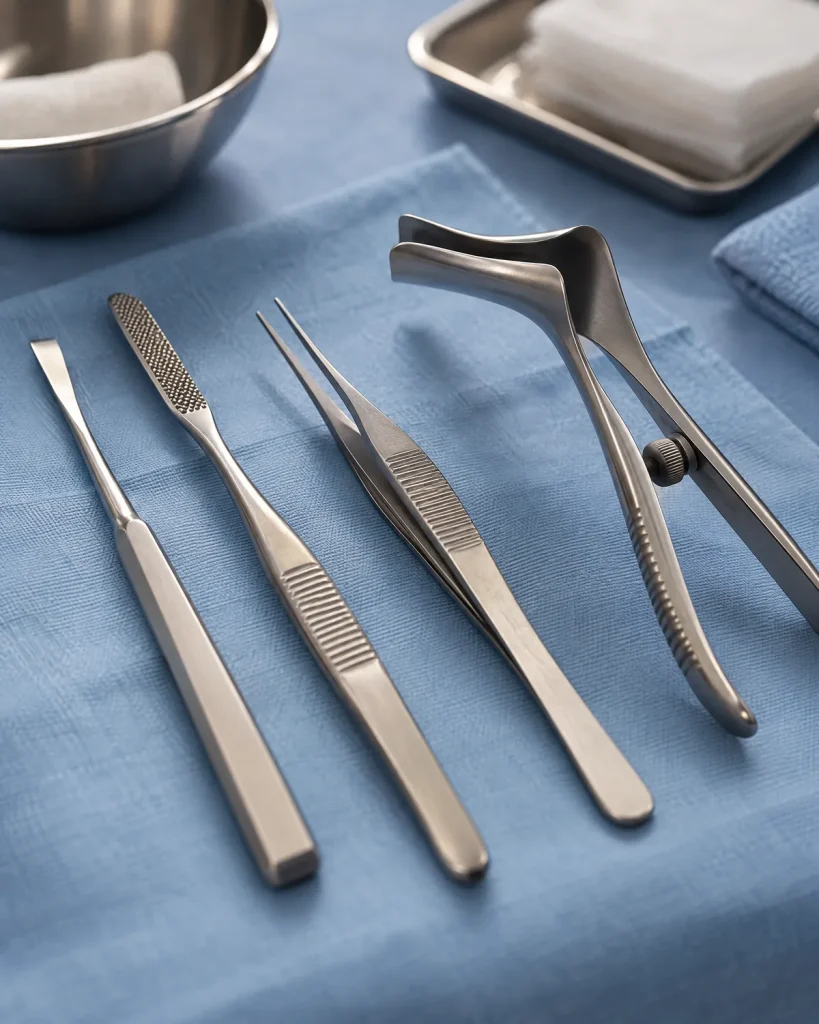
During surgery, the bone and cartilage that support the nose are reached through small incisions. These can be placed inside the nostrils (closed technique), or a small incision can be added across the columella, the strip of skin between the nostrils (open technique). Tissue is then removed, reshaped or added, sometimes using grafts of your own cartilage.
It is called primary rhinoplasty when it is the first surgery on the nose, and secondary or revision rhinoplasty when it corrects or improves a previous one. Functional and reconstructive rhinoplasty focuses on restoring how the nose works, for example by straightening a deviated septum, while still aiming for a balanced result.
In every case, the goal is to preserve or improve breathing. The specific technique is decided at your consultation.
Who it is for
Rhinoplasty is for people whose facial growth is complete and who want to change the shape, size or profile of their nose. Functional and reconstructive rhinoplasty is indicated for people who have trouble breathing, the effects of an injury, a congenital deformity, or who need reconstruction after previous surgery. Secondary rhinoplasty is for those who have already had nose surgery and want to correct or improve that result.
- Good general health, confirmed at your consultation.
- Realistic expectations: the goal is balance and proportion, not exact symmetry.
- No smoking: you will be asked to stop at least 2 to 3 weeks before surgery, depending on the case.
- Not recommended until the nose has finished growing, usually between ages 15 and 17, depending on the case.
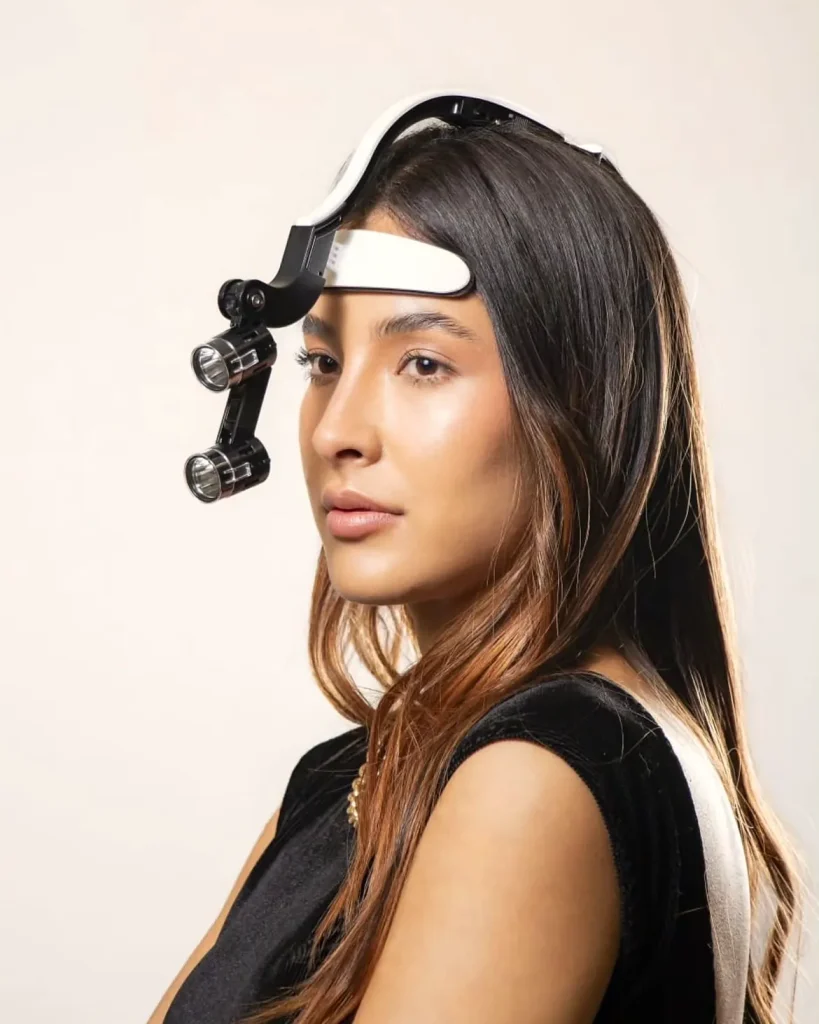
Dr. Katherine Mora
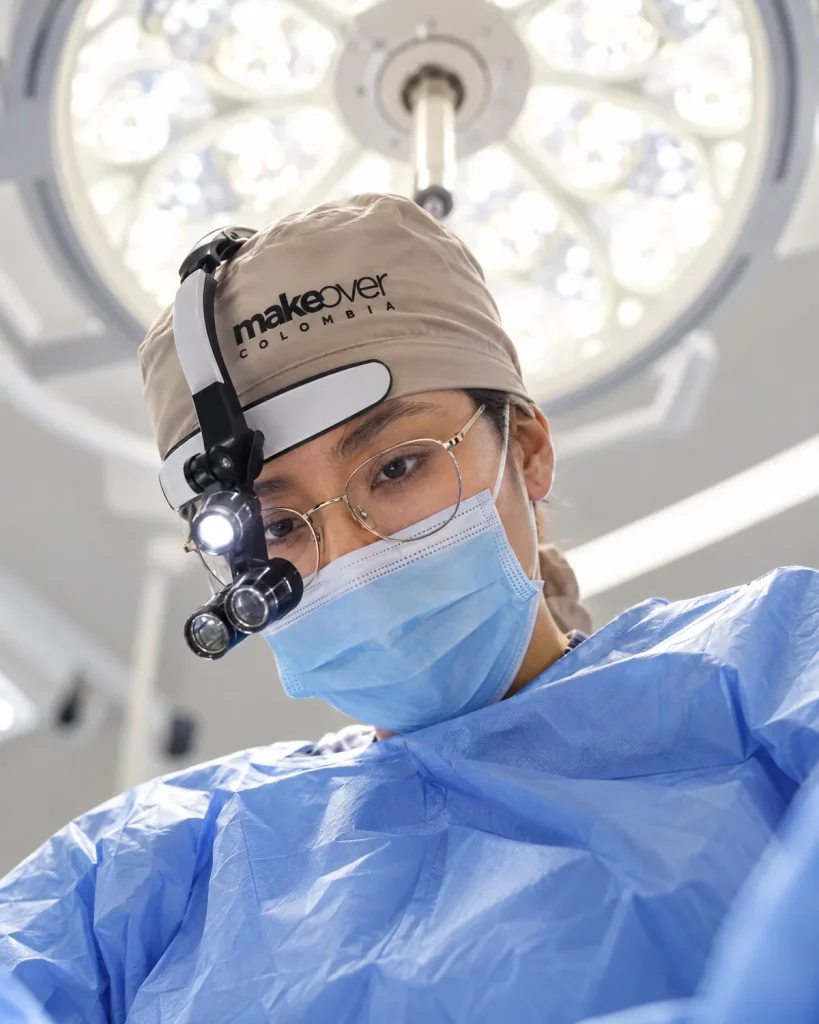
Dr. Mora performs the rhinoplasties at MakeOver Colombia.




What to know beforehand
Length of surgery
Rhinoplasty usually takes 1 to 4 hours, depending on the case. More complex surgeries can take longer. The estimated time for your surgery is set at your consultation.
Type of anesthesia
General anesthesia is the usual choice. In selected cases, rhinoplasty can be done with local anesthesia and sedation. The type of anesthesia is decided at your consultation, based on the extent and complexity of the surgery.
Hospital stay and recovery
Rhinoplasty is usually an outpatient procedure: most people go home the same day, with someone to accompany them. For more complex surgeries, an overnight stay may be recommended. You will often leave with a splint on your nose, usually removed 1 to 2 weeks later, and sometimes with packing or internal splints, so you will breathe through your mouth at first.
Most people return to everyday activities and work 1 to 2 weeks later, depending on the case and the type of job. Strenuous exercise is generally resumed 2 to 4 weeks after surgery, once you are cleared to do so. Contact sports and any activity with a risk of a blow to the nose need more time.
Aftercare
Your medical team gives you the exact instructions for your case. These are the usual ones:
- Rest with your head elevated for the first few days to reduce swelling and bleeding.
- Do not get the splint or dressings wet, and do not move them, until they are removed.
- Do not blow your nose for the first few weeks, and sneeze with your mouth open.
- Avoid strenuous exercise, bending over and heavy lifting until you are cleared to resume them.
- Do not rest glasses on your nose for the first few weeks.
- Keep your nose out of direct sun for the first few weeks and use sunscreen for several months.
- Get in touch if you notice heavy bleeding or swelling that increases instead of going down.
Expected results
Bruising and early swelling usually fade 2 to 3 weeks after surgery, and most of the remaining swelling settles over the first few months. The tip can stay swollen and less sensitive for several months. The final result can take up to a year, sometimes longer.
The outcome depends on your anatomy, the thickness of your skin and how your body heals. With the closed technique, the incisions are inside the nose and cannot be seen. The open technique leaves a small scar at the base of the nose that is usually hard to notice once healed. The changes are long-lasting, although the nose keeps changing with age.
Frequently asked questions
What is the difference between primary and secondary rhinoplasty?
Primary rhinoplasty is the first surgery on the nose. Secondary, or revision, rhinoplasty corrects or improves the result of a previous surgery. It tends to be more complex because of scar tissue and, at times, a lack of cartilage, which can be replaced with grafts taken from the septum, the ear or the rib. Your consultation looks at what can be corrected in your case.
Can rhinoplasty improve breathing?
It can, when the difficulty comes from a structural problem in the nose, such as a deviated septum. The septum can be corrected and the outer shape refined in the same surgery, which is the basis of functional rhinoplasty. Every rhinoplasty aims to preserve or improve breathing, and your consultation includes an examination of how air flows through your nose.
What are the risks of rhinoplasty?
Like any surgery, it carries risks: bleeding, infection and reactions to anesthesia. Those specific to rhinoplasty include difficulty breathing through the nose, changes in skin sensation, irregularities or asymmetry, poor scarring and, rarely, a hole in the septum. The result may also differ from what you expected, and a touch-up surgery may be needed. Your consultation reviews the risks that apply to you.
When will I see the final result?
Not right away. The nose is still swollen when the splint comes off. The most visible swelling goes down in the first few weeks and most of it settles in the first few months, but mild swelling, mostly at the tip, can come and go during the first year. That is why the final result is assessed at about one year, sometimes later.
When can I wear glasses and exercise again?
Glasses should not rest on your nose for the first few weeks, because they put pressure on it while it heals. Strenuous exercise is usually resumed 2 to 4 weeks after surgery, depending on the case, and contact sports later. The exact timing depends on what was done during your surgery, and you will be given it as part of your aftercare instructions.
What is the minimum age for rhinoplasty?
Cosmetic rhinoplasty is considered once the nose has finished growing, which usually happens between ages 15 and 17, depending on the case, somewhat earlier in women than in men. Operating sooner can affect the result, because the nose is still changing. When there is a functional problem or the effects of an injury, the right time is decided at your consultation.
This information is general and does not replace a medical assessment. The timing, technique and recovery for your case are defined in consultation with the surgeon.
Let us talk about your case
Every body needs a personal assessment. Tell us what you are considering and we will review the options that suit you best.