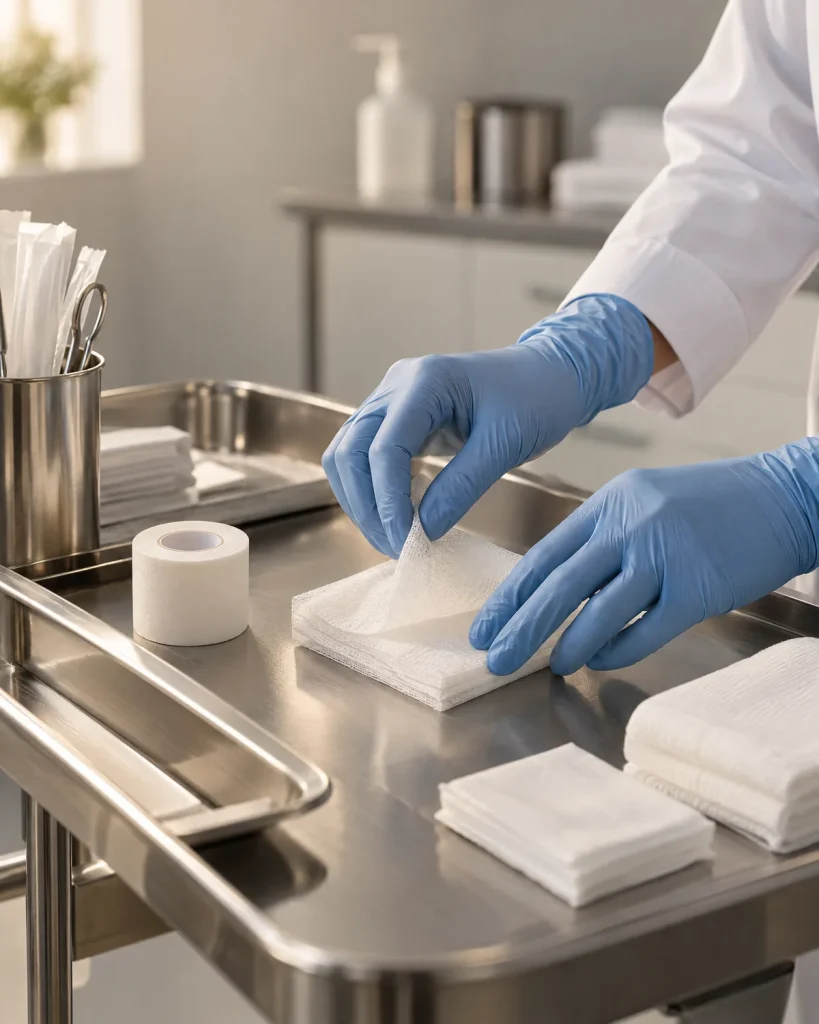
Your recovery, looked after every day
After surgery you stay with the same team: checkups, wound care and medical follow up throughout your recovery.
What stays with you after surgery
Specialized post-op care
Continuous post-op attention, lymphatic drainage, wound care and medical follow up throughout your recovery.
Guidance and emotional support
Close support at every stage, from your first decision to your full return to everyday life.
Clinical nutrition
A balanced, anti inflammatory eating plan designed to support healing and recovery.
How the follow up works
Recovery from plastic surgery moves through stages, each with its own care. These are the general stages; timing varies with the procedure and the person. Your surgeon defines the schedule of follow-up visits based on your surgery.
The first hours
When surgery ends you are taken to a recovery area, where the team monitors you as the anesthesia wears off and manages your pain. Depending on the extent of the procedure, you go home the same day with a companion or stay overnight for observation. Written instructions are usually provided.
The first week
These are the days of most swelling, bruising, and discomfort, managed with the medications you are prescribed. Relative rest and short walks from the start are recommended to help circulation. At the first follow-up visits, the incisions, the dressings, and any drains are checked.
The following weeks
Swelling goes down little by little and everyday activities are resumed gradually. Stitches that do not dissolve are usually removed within the first two weeks. The compression garment is worn for as long as indicated, and strenuous exercise waits until your surgeon clears you.
The months of follow-up
Mild swelling can last several months and scars take a year or more to fade, which is why the result is assessed over time. Follow-up visits become less frequent, and at each one your surgeon checks how you are healing and answers your questions.
When to seek care right away
- Trouble breathing, chest pain, or an irregular heartbeat.
- Fever or chills.
- Bleeding that does not stop or swelling that increases suddenly.
- Pain that gets worse or is not relieved by your prescribed medication.
- Redness, warmth, a bad smell, or yellow or green discharge from the incision.
- Swelling, pain, or redness in one leg.
This information is general and does not replace a medical assessment. What applies to your case is defined by the medical team.
Let us talk about what you need
Every body needs a personal assessment. Tell us what you are considering and we will review the options that suit you best.