
Liposculpture
Liposculpture, also called liposuction, removes localized fat deposits that do not respond to diet and exercise, to improve the body's contour and proportion. It is not a weight loss treatment. The fat that is removed can be used to add volume to other areas.
This page also covers lipo 360, which treats the full circumference of the torso, and liposculpture with fat transfer to the buttocks, hips, or breasts.
What it involves
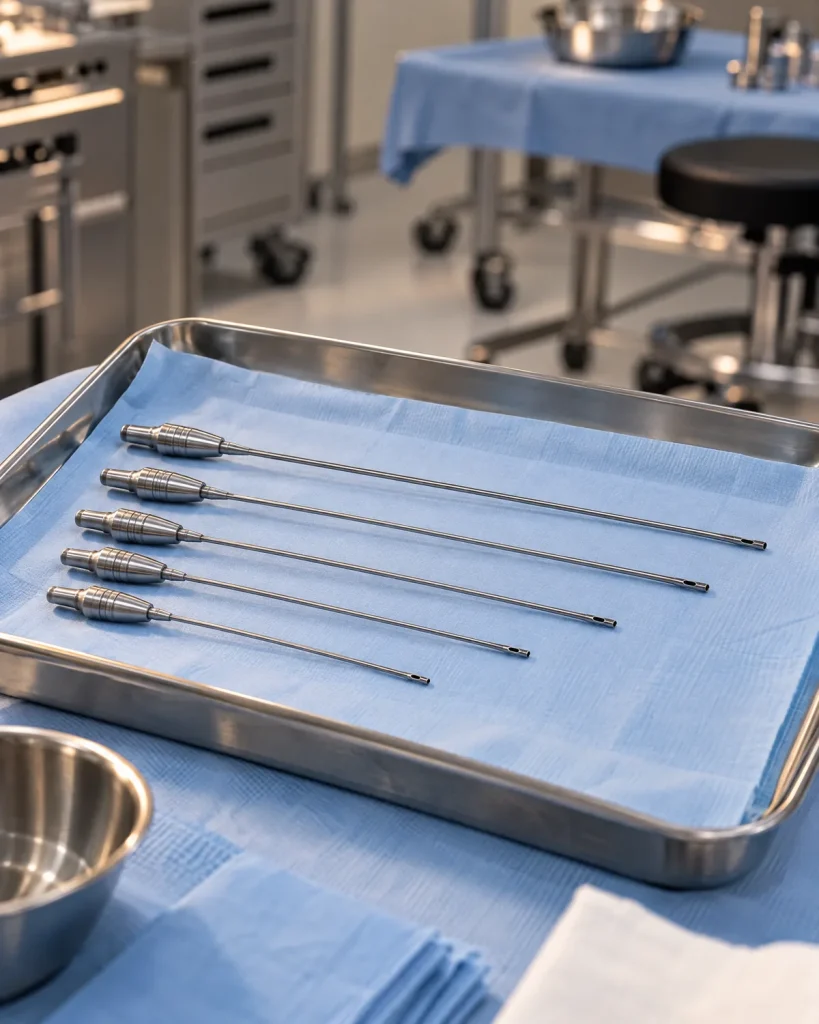
Through small incisions, the surgeon inserts a thin tube called a cannula that loosens and suctions out the fat beneath the skin. A fluid containing local anesthetic is infused first to reduce bleeding. In the laser-assisted technique, laser energy liquefies the fat so it is easier to remove.
MakeOver offers it as laser liposculpture with fat transfer: fat is removed from areas such as the abdomen, waist, and back, and that same fat is processed to add volume and projection to the buttocks, hips, or breasts. When the entire torso is treated, front and back, it is usually called lipo 360.
The areas to treat and the amount of fat to remove or transfer are defined at your medical evaluation, based on your anatomy and your health.
Who it is for
It is usually suited to adults at a stable weight close to their ideal, in good general health and with good skin tone, who have fat deposits out of proportion with the rest of the body. It does not replace diet or exercise and does not treat obesity. Your evaluation confirms whether you are a candidate.
- Localized fat in the abdomen, waist, back, or other areas that does not respond to diet or exercise.
- Stable weight, good general health, and skin elastic enough to adapt to the new contour.
- People who do not smoke or who can stop nicotine before and after surgery.
- Not intended as a way to lose weight or to treat cellulite or significant skin laxity.
- If there is a lot of excess skin, surgery to remove it, such as a tummy tuck, may be needed.
What to know beforehand
Length of surgery
There is no single duration: it depends on the number and size of the areas, the volume of fat removed, and whether fat transfer is included. In general terms it can take several hours. Your evaluation gives an estimate for your surgery.
Type of anesthesia
Small areas can be treated with local anesthesia and sedation. When several areas are treated or fat transfer is added, general anesthesia or intravenous sedation is the usual choice. The type of anesthesia is defined for each case at the evaluation.
Hospital stay and recovery
In many cases it is an outpatient surgery: you go home the same day, with someone to accompany you, after a few hours of observation. When a large volume of fat is removed or procedures are combined, an overnight hospital stay may be recommended.
The first days call for relative rest, with short walks from the start. Returning to work usually happens between a few days and two or three weeks, depending on the type of work and the extent of the surgery. Strenuous exercise is resumed gradually, generally 4 to 8 weeks later, depending on each case and on whether fat was transferred.
Aftercare
Your medical team gives you the exact instructions for your case. These are the usual ones:
- Wear the compression garment for as long as your surgeon indicates, usually several weeks.
- Take short walks from the first day to help circulation and lower the risk of blood clots.
- Avoid strenuous exercise and heavy lifting until your surgeon clears you.
- Do not smoke: tobacco slows healing and raises the risk of complications. Avoid alcohol as well while you are taking pain medication.
- Keep the treated areas out of the sun during the first weeks so the scars do not darken.
- If fat was transferred to the buttocks, avoid sitting or putting direct pressure on them for as long as you are told.
- Take only the medications you are prescribed and seek care right away for severe pain, trouble breathing, or chest pain.
Expected results
The change in contour starts to show in the first weeks, although swelling masks it. Most of the swelling and bruising settles within 2 to 5 weeks, depending on each case, and mild swelling can last several months. The result is assessed after that time.
The incisions are small and their marks usually fade over the months. The result depends on your skin's elasticity, your anatomy, and keeping a stable weight. Part of the transferred fat is reabsorbed, so the final volume takes months to settle.
Frequently asked questions
What are the risks of liposculpture?
Like any surgery, it carries risks. Bruising, swelling, and temporary changes in sensation are expected. Possible complications include fluid or blood collecting under the skin, infection, and contour irregularities or asymmetry. Serious complications, such as blood clots, fat or pulmonary embolism, injury to deeper structures, or reactions to anesthesia, are uncommon. At your evaluation they are reviewed in light of your health.
Is liposculpture a way to lose weight?
No. It is a body contouring surgery, not a treatment for obesity or a substitute for diet and exercise. It works best for people at a stable weight who have localized fat. It does not correct cellulite or loose skin either: if there is excess skin, the surgeon may suggest a surgery that removes it.
What happens to the fat that is transferred?
The fat that is removed is processed and injected in small amounts into the area to be enhanced. Part of it takes and part is reabsorbed over the following months, which is why the initial volume goes down. The fat that remains behaves like the rest of your body fat and changes if you gain or lose weight. In some cases a touch-up may be considered.
Do the results last over time?
The fat cells that are removed are gone permanently, but the ones that remain can grow if you gain weight. That is why the result holds up better with a stable weight, a balanced diet, and physical activity. Aging, pregnancy, and weight changes can alter your contour over the years.
How long do I wear the compression garment?
Your surgeon decides. In general terms, compression garments are worn for several weeks to control swelling and help the skin adapt to the new contour. Your surgeon will tell you how many hours a day to wear it and when to start phasing it out as the swelling goes down.
This information is general and does not replace a medical assessment. The timing, technique and recovery for your case are defined in consultation with the surgeon.
Let us talk about your case
Every body needs a personal assessment. Tell us what you are considering and we will review the options that suit you best.