

Buttock augmentation (gluteoplasty)
Gluteoplasty is buttock augmentation surgery. It aims to add volume, projection, and definition by transferring your own fat, widely known as a Brazilian butt lift or BBL, or with implants. It does not remove loose skin: that is the role of a buttock lift.
What it involves
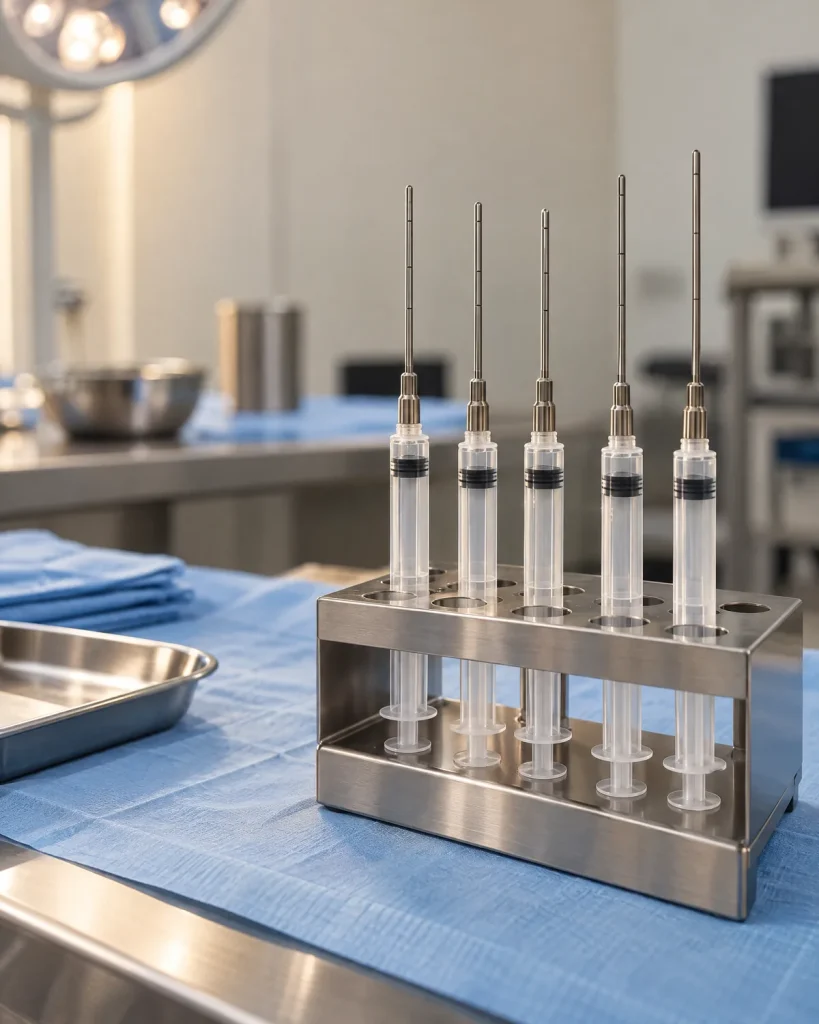
There are two main techniques. In fat transfer, also called fat grafting, the fat is collected by liposuction from areas such as the abdomen, waist, back, or thighs. It is then processed and injected into the buttocks with cannulas, in small amounts, to add volume and projection.
In augmentation with implants, silicone implants are placed through an incision in the crease between the buttocks. Each implant sits in a pocket within the gluteal muscle or next to it, depending on the technique.
The choice depends on your anatomy, on how much fat is available, and on the change you are looking for. It is defined at the assessment.
Who it is for
It is meant for people in good health who want more volume or projection in the buttocks, or who want to correct an asymmetry. Fat transfer requires having enough fat in other areas; when there is not enough, implants are considered. If loose skin or sagging is the main issue, a different surgery is indicated.
- A wish for more volume, projection, or symmetry in the buttocks.
- Good health, stable weight, and realistic expectations.
- Enough fat in other areas, if fat transfer is being considered.
- Not smoking, or stopping before and after surgery as instructed.
- On its own it does not correct marked sagging or loose skin.
What to know beforehand
Length of surgery
It depends on the technique, on the amount of liposuction, and on whether it is combined with another surgery. As a general reference, buttock augmentation surgeries usually take several hours. The assessment provides an estimate for your case.
Type of anesthesia
General anesthesia is the usual choice. In small volume procedures, intravenous sedation with local anesthesia may be used. The type of anesthesia is defined before surgery, based on the technique, the extent of the procedure, and your health.
Hospital stay and recovery
It is usually an outpatient surgery, with a few hours of observation before going home. In more extensive or combined surgeries, one night in the hospital may be recommended. For at least the first 2 weeks, prolonged sitting is avoided: you rest face down or on your side and, when you sit, you use a cushion under your thighs.
As a general guide, people return to desk work 1 to 3 weeks after surgery, depending on the technique and the case, and later if the job involves sitting for long periods. Exercise is resumed gradually, generally 6 to 10 weeks after surgery, once your surgeon clears you.
Aftercare
Your medical team gives you the exact instructions for your case. These are the usual ones:
- Avoid prolonged sitting for at least the first 2 weeks, or longer if you are told so.
- When you sit, use a cushion under your thighs to keep weight off your buttocks.
- Sleep face down or on your side for as long as the pressure restriction lasts.
- Wear the compression garment for as long as your surgeon instructs.
- Walk in short stretches from the first days to help circulation.
- Do not lift heavy objects or exercise until your surgeon clears you.
- Seek care right away for shortness of breath, chest pain, or palpitations.
Expected results
The increase is visible from the start, although the initial shape includes swelling. With fat transfer, part of the transferred fat is reabsorbed during the first months: as a reference, 20 to 40%, depending on the case. The result is assessed 3 to 6 months after surgery, and with fat transfer it can take up to a year.
The fat that remains changes with your weight, like the rest of your body fat. With implants the volume is more predictable, although they may need revision over the years. The scars are small in the liposuction areas and, with implants, sit in the crease between the buttocks.
Frequently asked questions
What are the risks of buttock augmentation?
It shares the risks of any surgery: bleeding, infection, fluid collection, asymmetry, changes in skin sensation, and blood clots in the veins. Fat transfer also carries an uncommon but serious risk, fat embolism, which can be fatal and led the scientific societies to issue specific warnings. With implants, infection, implant displacement, or hardening around the implant can occur, and sometimes the implants have to be removed.
What do the scientific societies warn about fat transfer to the buttocks?
In 2018 several plastic surgery societies warned that this surgery had the highest mortality among cosmetic surgeries, because of fat embolism: fat that enters a vein and travels to the heart or lungs. Since then they recommend injecting the fat only into the tissue under the skin, never into or below the muscle, and they support the use of ultrasound during the injection. Ask about these measures at your assessment.
Fat transfer or implants?
It depends on your anatomy and on what you are looking for. Fat transfer requires having enough fat in other areas and allows the donor areas to be contoured at the same time, although part of the fat is reabsorbed. Implants are considered when little fat is available or when a more predictable projection is wanted. Each technique has its own risks, and the decision is made at the assessment.
How much fat remains after a fat transfer?
Not all of the transferred fat remains. As a reference, the scientific societies mention that 60 to 80% stays, but it varies from person to person and no figure can be assured. That is why the final volume is assessed months later, and in some cases a new transfer is considered. The fat that remains changes with your weight.
When can I sit and return to my routine?
For at least the first 2 weeks, prolonged sitting is avoided, and after that a cushion under the thighs is used for the period your surgeon indicates. As a guide, people return to desk work 1 to 3 weeks after surgery and to exercise 6 to 10 weeks after surgery, depending on the technique and the case.
How is it different from a buttock lift?
Buttock augmentation adds volume; a buttock lift removes loose skin and raises sagging tissue. If the buttock has little volume but the skin is firm, augmentation is usually considered. If sagging is the main issue, for example after major weight loss, a lift is usually considered. Sometimes they are combined. The assessment defines which one applies.
This information is general and does not replace a medical assessment. The timing, technique and recovery for your case are defined in consultation with the surgeon.
Let us talk about your case
Every body needs a personal assessment. Tell us what you are considering and we will review the options that suit you best.