

Biopolymer removal
Biopolymer removal is a procedure that aims to remove, as far as possible, the injected material in order to relieve symptoms, prevent complications, and improve quality of life. Each case is unique and requires a detailed evaluation before the treatment is defined.
This page covers biopolymer removal from the buttocks and from the face. Biopolymers is the name given to permanent filler substances, such as liquid silicone, injected for cosmetic purposes.
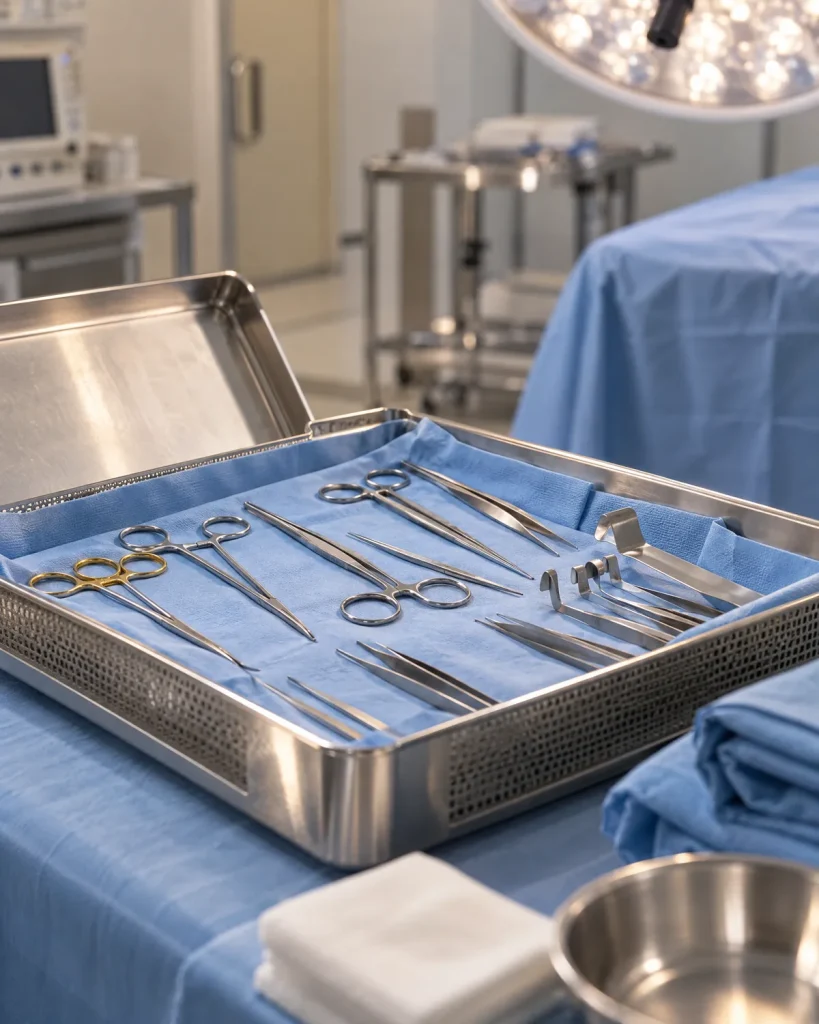
What it involves
Biopolymers are permanent filler substances, such as liquid silicone, oils, or other synthetic materials, that were injected for cosmetic purposes and that the body does not reabsorb. The body treats them as a foreign object: hardened tissue can form around the material, and it can migrate to other areas.
The surgery aims to remove, as far as possible, that material along with the affected tissue. It cannot always be taken out completely, because it is usually mixed in with the skin, fat, or muscle, and removing all of it could cause greater harm. In some cases more than one operation is needed.
The technique and the extent are defined at your evaluation, based on the area involved, the time since the injection, and the complexity of the case.
Who it is for
It is intended for people who had biopolymers or other permanent filler substances injected into the buttocks or face and who have symptoms or want to prevent complications. Problems can appear soon after the injection or years later. Each case is unique: your evaluation reviews yours and defines whether surgery is indicated.
- Pain, swelling, or hardening in the area where the material was injected.
- Lumps, changes in skin color, or contour deformity.
- Material that has migrated to nearby areas.
- Repeated infections or wounds that do not heal in the injected area.
- It requires a detailed evaluation of the area, the time since the injection, and the complexity.
What to know beforehand
Length of surgery
There is no usual length that serves as a reference for every case. The time in surgery depends on the area, on how extensive the material is, and on the complexity. Your evaluation gives an estimate for your surgery.
Type of anesthesia
The type of anesthesia depends on the area and on the extent of the surgery, so there is no single option. It is defined for each case at the evaluation, according to your health and the surgical plan.
Hospital stay and recovery
Whether the surgery is outpatient or requires a hospital stay depends on the area treated and on the extent: removing a small, localized deposit is not the same as treating a wide area. That is why there is no length of stay that applies to every case.
The same is true of the return to daily routine, work, and exercise: it is defined for each person based on what is removed and on how healing progresses. If the treatment is planned in several operations, each one has its own recovery. Your evaluation explains the estimated times for your case.
Aftercare
Your medical team gives you the exact instructions for your case. These are the usual ones:
- Follow the instructions on wound care, rest, and drains if you have them; they vary with the area and extent of surgery.
- Keep the wound clean and dry, and do not soak it in water until your surgeon clears you.
- Do not smoke: tobacco slows healing and raises the risk of infection and of the wound opening.
- Seek care right away for fever, redness, foul-smelling drainage, or increasing pain in the operated area.
- Get urgent care for trouble breathing, chest pain, or sudden weakness in the face, an arm, or a leg.
- Always tell your doctors that you had biopolymers injected, even if it was a long time ago.
- Keep up long-term follow-up: some material may remain and symptoms can come back.
Expected results
The goal is to relieve symptoms, prevent complications, and improve quality of life. The result depends on how much material can be removed: because it is not always possible to take it all out, part of it may remain and some symptoms may persist or come back over time.
The surgery leaves permanent scars, which take months to fade, and the area may be left with irregularities or with less volume, depending on the tissue that had to be removed. In some cases other procedures are considered later to improve the contour. What you can expect in your case is explained at your evaluation.
Frequently asked questions
What are the risks of biopolymer removal?
It is a complex surgery and it carries risks. On top of the general risks of any operation, such as bleeding, infection, wound healing problems, and reactions to anesthesia, there are those specific to this case: material left behind, visible scars, contour irregularities, and the need for further operations. Not having treatment also carries risks, because the material can keep causing inflammation and infections or can migrate. Your evaluation weighs one against the other.
Can all of the material be removed?
Not always. These substances are not contained in a shell, as an implant is: they spread between the tissues and can migrate. That is why the surgery aims to remove the material as far as possible, without causing greater harm to healthy tissue. How much can be removed depends on the area, the amount, and the time that has passed, and it cannot be assured in advance.
What symptoms can biopolymers cause?
They can cause pain, swelling that comes and goes, hardening, lumps, changes in skin color, infections, and deformity of the area. The material can also migrate and cause problems far from where it was injected. These problems can appear soon after the injection or months and years later. If you notice any of them, see a doctor and mention that you had a substance injected, even if you do not know which one.
Should I be seen if I have no symptoms?
Yes, it is worth doing. Some people go years without discomfort, and complications can appear long after the injection. An evaluation makes it possible to know the area involved, the time that has passed, and the complexity of your case, and to decide with information whether surgery is advisable, when, and to what extent. Being seen does not commit you to surgery: the indication for surgery varies from one person to another.
Is removal the same in the buttocks and in the face?
The principle is the same: to remove the material as far as possible without causing greater harm. What changes is the extent and the approach, which depend on how much material there is, where it is, and the nearby structures. That is why the length of surgery, the type of anesthesia, the stay, and the recovery are not the same in one area and the other, and they are defined at your evaluation.
This information is general and does not replace a medical assessment. The timing, technique and recovery for your case are defined in consultation with the surgeon.
Let us talk about your case
Every body needs a personal assessment. Tell us what you are considering and we will review the options that suit you best.