

Chin liposuction
Chin liposuction, also known as submental or double chin liposuction, removes excess fat from under the chin to define the contour of the face and neck. It treats fat, not loose skin: your evaluation looks at which of the two is the main issue.
This page covers chin liposuction, also called double chin liposuction or submental liposuction.
What it involves
Through one or more very small incisions, usually placed under the chin or behind the ears, the surgeon inserts a thin tube called a cannula connected to a suction device. It loosens and suctions out the fat that sits beneath the skin.
A fluid containing local anesthetic is usually infused first to help control bleeding and discomfort. The goal is to remove just the right amount of fat: taking too much can leave contour irregularities.
It can be done on its own or together with other facial surgeries, such as a neck lift or chin surgery. Your evaluation defines the plan based on your anatomy and the quality of your skin.
Who it is for
It is usually suited to adults in good health and at a stable weight who have localized fat under the chin that does not respond to diet or exercise, and skin with good elasticity. It does not correct laxity of the skin or the neck muscles. Your evaluation confirms whether you are a candidate and distinguishes between fat alone and fat with laxity.
- Localized fat under the chin that does not respond to diet or exercise.
- Skin with good elasticity, able to adapt to the new contour.
- Good general health, stable weight, and realistic expectations.
- People who do not smoke or who can stop nicotine before and after surgery.
- Not suited when laxity of the skin or neck muscles is the main issue; a neck lift may be considered instead.
What to know beforehand
Length of surgery
It is a short surgery. In general terms it usually takes 30 minutes to 2 hours, depending on each case, the amount of fat, and whether it is combined with other procedures. Your evaluation gives an estimate for your surgery.
Type of anesthesia
It can be done under local anesthesia, with or without sedation, or under general anesthesia. When it is done on its own, local anesthesia is common; when combined with other surgeries, sedation or general anesthesia is the usual choice. The type of anesthesia is defined at your evaluation.
Hospital stay and recovery
It is usually an outpatient surgery: you go home the same day, with someone to accompany you, after a period of observation. Swelling, bruising, mild pain, and some numbness in the area are normal during the first days.
Many people return to work and everyday activities between a few days and two weeks later, depending on each case and the type of work. Strenuous exercise is usually avoided for 4 to 6 weeks and resumed gradually. Most of the swelling settles within 2 to 6 weeks, depending on each case.
Aftercare
Your medical team gives you the exact instructions for your case. These are the usual ones:
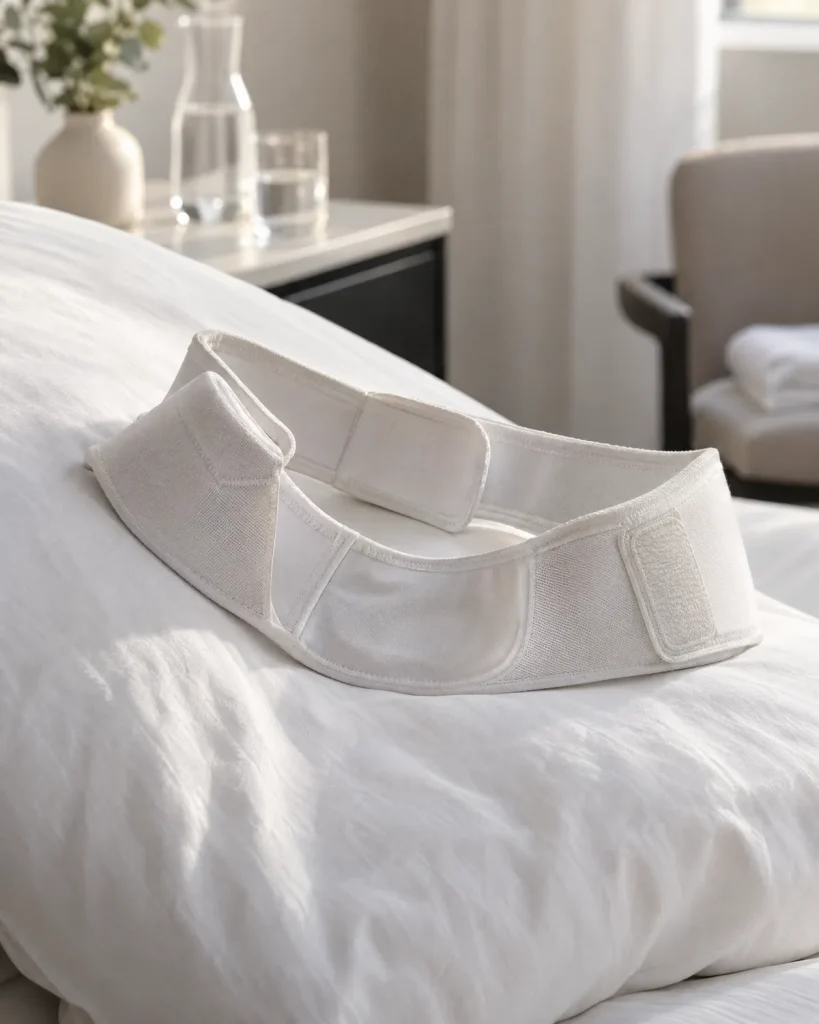
- Wear the compression garment under your chin for as long as your surgeon indicates; it is usually recommended for several weeks.
- Take short walks from the first day and avoid strenuous exercise until your surgeon clears you.
- During the first days, avoid bending over, straining, and lifting heavy objects.
- Do not smoke: tobacco slows healing and raises the risk of complications. Avoid alcohol while you are taking pain medication.
- Take only the medications you are prescribed and do not use aspirin or anti-inflammatory drugs without checking with your surgeon.
- Keep the treated area out of the sun during the first weeks so the skin and scars do not darken.
- Keep your follow-up visits and seek care promptly for severe pain, pain that does not ease, or signs of infection.
Expected results
The change in contour starts to show in the first weeks, as the swelling goes down. The result finishes taking shape between 3 and 6 months, depending on each case, once the skin has adapted to the new contour.
The incisions are very small and their marks usually fade over the months. The result depends on your skin's elasticity, your age, your bone structure, and keeping a stable weight. The fat that is removed is gone permanently, but the fat that remains can increase if you gain weight.
Frequently asked questions
What are the risks of chin liposuction?
Like any surgery, it carries risks. Swelling, bruising, and changes in sensation, usually temporary, are expected. Possible complications include infection, fluid or blood collecting under the skin, contour irregularities or asymmetry, and changes in skin color. A nerve in the area can also be injured, which is usually temporary and rarely permanent. At your evaluation these risks are reviewed in light of your health.
Does chin liposuction fix loose neck skin?
No. Liposuction removes fat, but it does not tighten the skin or the neck muscles. It works best when the skin still has good elasticity and adapts on its own to the new contour. If there is marked laxity or visible muscle bands, the surgeon may suggest another surgery, such as a neck lift, alone or combined. That is why your evaluation distinguishes between fat alone and fat with laxity.
Do the results last?
The fat that is removed is gone, so the change is usually long lasting. Still, the fat that remains can increase if you gain weight, and aging continues: over the years the skin of the neck loses firmness. Keeping a stable weight, with a balanced diet and physical activity, helps preserve the result.
Will I need to wear a compression garment?
Usually, yes. After surgery a compression garment or band under the chin is commonly recommended to help control swelling and help the skin adapt to the new contour. Your surgeon decides how long you wear it, usually several weeks. Follow their instructions on how many hours a day to keep it on.
Can it be combined with other surgeries?
Yes. It can be done alone or in the same surgery as other facial procedures, such as a neck lift, a facelift, or chin surgery, when there is laxity or a chin with little projection in addition to fat. Combining procedures changes the duration, the anesthesia, and the recovery. Your evaluation defines what makes sense for you.
This information is general and does not replace a medical assessment. The timing, technique and recovery for your case are defined in consultation with the surgeon.
Let us talk about your case
Every body needs a personal assessment. Tell us what you are considering and we will review the options that suit you best.